 Turnkey Roofing Contractors
  Jul 21, 2026
Choosing the Right Roofing Material for Different Weather Conditions
Read More


Residential License # 890459
Commercial License # 3667

Professional roofers combine visual tracing, moisture meters, infrared thermal imaging, water testing, and attic inspections to locate hidden roof leaks that are often several feet from where the damage actually shows up. Each method reveals a different clue, from wet insulation to temperature differences, and most licensed roofers layer two or more together before calling a diagnosis final. In humid climates like Greater New Orleans, trapped moisture can travel along decking and framing for a long distance before it ever appears as a ceiling stain.
A stain on the ceiling rarely marks the actual spot where water is getting in. Roof leaks travel along decking, rafters, and insulation before gravity finally pulls the water down through drywall, sometimes showing up ten feet or more from the real entry point. That gap between the visible damage and the hidden source is exactly why how professionals find roof leaks matters so much to anyone who tries chasing the problem alone with a flashlight. Roof leak detection is part science and part experience, and it usually calls for tools that go well beyond climbing a ladder and looking around.
TurnKey Roofing Contractors has walked Greater New Orleans area homeowners and business owners through this exact process for years, tracing leaks across steep asphalt shingle roofs and flat commercial membranes alike. Visit the homepage to see the full range of services, then keep reading to understand the techniques a trained crew actually uses once they are on your roof.
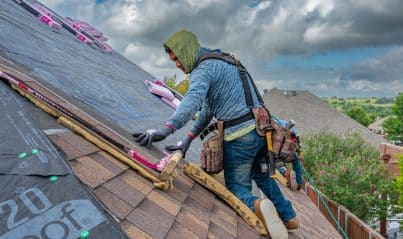
Professionals start with a systematic visual trace, working from the interior stain or drip point upward through the attic and across the roof deck toward likely entry points such as flashing, vents, and roof penetrations. This first pass narrows the search area before any specialized equipment comes out, since most leaks originate well uphill from where water finally shows itself.
A trained eye checks flashing around chimneys, skylights, and vent boots first, since these penetrations account for a large share of leaks on both shingle and flat roofs. Cracked pipe boots, lifted or curled shingles, and popped nails are common culprits that show up quickly during a close visual pass. Most residential calls in the Greater New Orleans area start with exactly this kind of walk-through, which is why a dedicated residential roof leak detection visit always begins here before any tool comes out.
On flat commercial roofs, the crew instead walks the membrane looking at seams, parapet walls, and drain areas, since low-slope systems fail differently than a pitched residential roof. Anyone comparing the warning signs that call for an urgent repair can use this same visual logic before picking up the phone.

Moisture meters measure the electrical capacitance or resistance of roof decking and insulation, giving a numeric reading that shows exactly how far wet material extends beneath the surface. Roofers move the meter across a grid pattern to map the boundary between saturated and dry decking without ever cutting into the roof to look.
Two types of meters show up most often on a roof. Pin-type meters use small probes that read moisture content directly at a specific point, while non-invasive capacitance scanners pass over the surface and read deeper into the decking and insulation layers without leaving a mark. Commercial buildings with large flat or low-slope roofs benefit the most from this kind of scanning, since a single reading can flag thousands of square feet worth of wet insulation hiding under an intact membrane. That kind of large-area mapping is a routine part of a commercial roof leak detection visit, especially on buildings where tearing off sections just to look is not practical.
Infrared thermal imaging cameras detect the temperature differences that wet insulation holds onto after a sunny day, since damp material releases stored heat more slowly than the dry roofing around it. Scanned near dusk, these temperature patterns show up as a thermal map that points a crew directly toward trapped moisture.
This method works because the sun heats the whole roof during the day, and wet insulation holds that heat like a thermal battery long after sunset. A camera scan performed at the right time of evening shows wet zones as warmer patches against the surrounding dry roof, without pulling a single shingle or membrane sheet.
The technique works well on complex roofs, flat commercial systems, and leaks that seem to come and go. It can trace water back to its true source instead of just where it eventually dripped through the ceiling. This is one reason a residential crew or a commercial team often pairs thermal scanning with the visual check described in a typical professional roof inspection.

When a visual trace or thermal scan points to a likely area, roofers isolate one section of roof and run water over it with a hose. Someone inside watches for the first sign of moisture while the crew works from the low point of the roof upward, confirming the exact entry point before any repair begins.
Water testing is slower than thermal imaging or a moisture meter scan, so most professionals save it for confirming a suspected spot rather than searching an entire roof. On commercial low-slope roofs, this section-by-section approach follows the same logic as flood-testing guides such as ASTM D5957. Those guides call for water to sit on a test area long enough to prove whether a seam or membrane actually holds.
On a sloped residential roof, the test looks more like a controlled hose test around one vent or valley, moving up the roof until the leak reveals itself. Problems uncovered this way often show up on lists like the most common roofing problems homeowners face, from failed pipe boots to worn flashing.
An attic inspection lets roofers see the underside of the deck directly, checking for water staining, mold, rotted wood, and daylight coming through gaps around vent stacks or the ridge. In the Greater New Orleans area, attics also trap heat and humidity, so this step often separates a true roof leak from ordinary condensation.
Rafters and decking that stay wet also invite rot and mold, which is why a hands-on look from below often confirms what a meter or thermal scan already flagged. Vent boots, ridge vents, and bathroom exhaust fans are common attic-side entry points that rarely show up from a ground-level look at the roof. High humidity in the region means condensation on ductwork can mimic a leak, so an experienced crew checks insulation and airflow before blaming the roof covering itself.
Homeowners who want a broader view of attic and roof condition can read about how often a roof should be inspected. It also helps to review how to safely check for storm damage between professional visits.
Finding a hidden leak accurately the first time saves money, since guessing leads to repeated repairs on the wrong section of roof while the real damage keeps spreading underneath. Combining two or more of these methods, rather than relying on a single tool, is what separates a lasting fix from a temporary patch. TurnKey Roofing Contractors brings this layered approach to every leak call across the Greater New Orleans area, matching the right technique to the roof type in front of the crew.
Most leak investigations take one to three hours, depending on roof size and how many techniques are needed to confirm the source. A straightforward visual trace with a moisture meter often wraps up quickly, while a job that requires infrared thermal imaging and a follow-up water test can take longer. Complex commercial roofs in the Greater New Orleans area sometimes need a second visit to fully map the moisture.
Yes, water regularly travels along rafters, decking, and insulation before it ever reaches drywall or a ceiling tile. This is why professionals trace the leak upward from the stain through the attic rather than assuming the damage sits directly below the entry point. A moisture meter or thermal scan often reveals just how far the water has actually traveled.
An attic inspection is one of the most reliable steps, since it lets a roofer see the underside of the deck and framing directly. It is not always the first step, but most thorough investigations include it once a suspect area has been narrowed down. Attics in New Orleans also trap humidity, so this step helps rule out condensation.
Infrared thermal imaging works best on roofs with consistent sun exposure and moisture-retaining insulation, which makes it especially effective on flat and low-slope commercial roofs. It can be less reliable on metal roofing or roofs shaded most of the day, since temperature differences are harder to read. Professionals usually pair it with a moisture meter for confirmation.
A moisture meter gives an instant numeric reading of how wet the decking or insulation is without adding any water to the roof. A water test, sometimes following flood-testing guides such as ASTM D5957 on commercial membranes, actually applies water to confirm a suspected leak path. Roofers often use a meter first, then a water test to verify the exact spot.
A visual check can miss leaks that travel along decking or insulation before showing any surface damage. Roof leak detection tools like moisture meters and infrared thermal imaging exist specifically because water rarely drips straight down from where it enters. Combining a visual trace with at least one of these tools gives a much more reliable answer.
TurnKey Roofing Contractors uses visual tracing, moisture meters, infrared thermal imaging, and water testing to find the real source of a leak, not just where the water happens to show up. Contact us or call 504-688-7397 to schedule a professional leak detection visit.