Turnkey Roofing Contractors
  Aug 24, 2026
Best Time of Year to Replace Your Roof & Why It Matters
Read More


Residential License # 890459
Commercial License # 3667

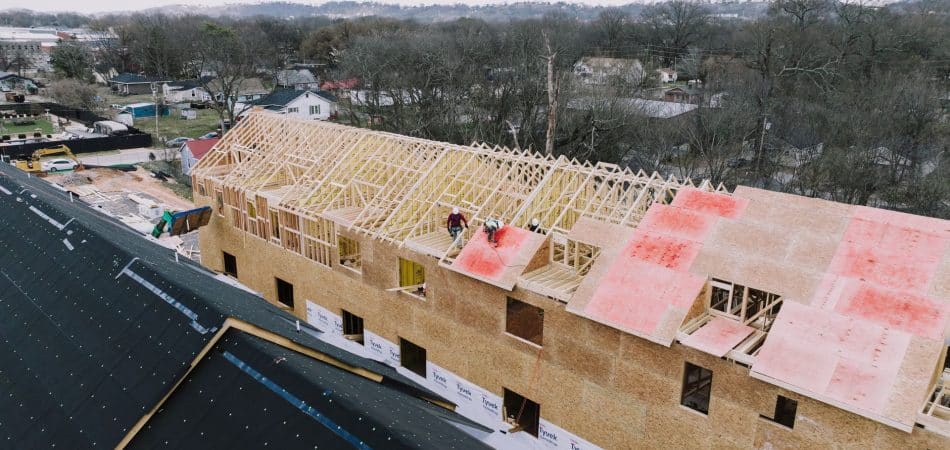
New construction roofing means fitting a roof installation into a builder’s construction schedule instead of a homeowner’s replacement timeline, with material choices tied to spec versus custom pricing and licensing that covers both residential and light commercial work. Builders who plan the roofing scope early avoid framing delays and change orders later. A subcontractor who can quote fast, hold a schedule slot, and transfer a written warranty to the buyer makes closing day simpler.
Builders and developers do not shop for a roof the way a homeowner does. A homeowner is replacing something that already exists. A builder is coordinating a roof into a sequence of trades where a two-day slip can push back drywall, insulation, and a closing date. New construction roofing has to work around that sequence, not the other way around. TurnKey Roofing Contractors works with homebuilders and developers across the New Orleans area on both spec and custom projects, and this guide covers what to ask a roofing subcontractor before signing a contract. You can review general background on the company at the homepage.
New construction roofing is installed on a bare deck before any prior roofing history exists, which means the subcontractor is working from architectural plans instead of inspecting an old roof for damage. There is no tear-off, no hidden rot to uncover, and no insurance claim paperwork. The tradeoff is that everything has to align with the framing crew’s timeline and the building inspector’s schedule. A roofing sub who is used to replacement work sometimes underestimates how tightly a new build schedule runs. Builders need a partner who treats the dry-in date as a hard deadline, because every trade behind the roof is waiting on it.
Roofing on a new build typically starts once the deck, trusses, and underlayment are ready for inspection, and the sub needs a firm go-date from the general contractor to hold a crew slot. Weather delays on a residential replacement are an inconvenience. Weather delays on a new build push every downstream trade. A roofing subcontractor working new construction should be able to commit to a start window and communicate directly with the site superintendent, not just the homeowner. For multi-lot developments, that also means being able to rotate a crew between several addresses without losing a day.
If you are bidding out roofing on an active development, get in touch through the Contact page or call 504-688-7397 to talk through your build schedule before your framing crew tops out.

Spec homes usually call for cost-predictable materials like standard asphalt shingles, while custom builds and higher-end developments often specify architectural shingles, metal, or tile to match a design budget. A developer running ten spec homes needs pricing that holds across every unit. A custom home builder is usually working from an architect’s material spec and a tighter aesthetic brief. TurnKey handles residential roof replacement work across both scenarios, and the same material options used on that side of the business apply to new construction, including asphalt shingle, metal standing seam, and tile systems. You can see the full replacement scope on the residential roof replacement page.
Material selection also affects the wind warranty a homeowner inherits at closing, so it is worth deciding early rather than value-engineering it out at the last minute.
Louisiana requires separate residential and commercial licensing, and a builder working across both housing developments and light commercial projects needs a roofer holding both, not just one. TurnKey carries Residential License #890459 and Commercial License #3667, which covers single-family developments as well as light commercial builds like a small retail strip or a multi-family project’s clubhouse. A general contractor should confirm license numbers on every roofing bid before it goes into a subcontractor agreement. Skipping that check is one of the fastest ways to end up with a closing delay when a final inspection turns up a licensing gap.
For light commercial scope specifically, the commercial roof replacement page covers the material options and process used on those projects.

A new construction roof typically ships with the same manufacturer and workmanship warranties as a replacement roof, and the builder needs that paperwork ready to hand off at closing so the eventual homeowner has coverage from day one. TurnKey backs new installs with a 50-Year Non Pro-rated Warranty and a 10-Year Workmanship Warranty, plus a 15-Year Unlimited Wind Warranty that has no cap on wind speeds and covers labor, materials, and repair costs. Builders should ask for the warranty documents in writing before the sale closes, not after a buyer calls with a question. A missing warranty packet at closing is an easy problem to avoid and a hard one to fix later.
Buyers and property managers can find the full terms of that wind coverage on the Unlimited Wind Warranty page.
A builder should ask about crew capacity across multiple active sites, whether the sub can commit to a written schedule, what warranty documentation gets handed off at closing, and whether pricing holds across a multi-lot order. These four questions weed out subs who are set up only for one-off replacement work. Pricing swings are a common surprise on developments with more than a handful of lots, so locking in per-unit pricing before the first roof goes on saves renegotiation later. It also helps to read how a company talks about its own bidding and hiring process, which is covered in how to choose the right roofing contractor for your home or business.
Timeline questions matter just as much as material questions, and how long does roof replacement take breaks down the labor days a typical roof requires, which is a useful baseline even on a new build.
Per-unit roofing costs on new construction generally track close to replacement pricing for the same square footage and material, since labor and material costs do not change much between a bare deck and a tear-off. Builders comparing bids should look at cost per square rather than a flat number, since lot sizes and roof pitch vary across a development. Current market pricing trends for the region are broken down in the cost of a roof replacement in 2025, which gives developers a comparable reference point even though that article is written for homeowners. Material trend shifts worth watching for spec pricing are also covered in top roofing trends to watch in 2025.
Builders who lock in a roofing subcontractor early, confirm licensing, and get warranty paperwork lined up before closing avoid most of the friction that shows up late in a project. TurnKey Roofing Contractors bids new construction and light commercial roofing work across the greater New Orleans area and can talk through your build schedule before you finalize a subcontractor list.
Yes, TurnKey bids new construction roofing directly with general contractors and developers, coordinating around the framing and dry-in schedule rather than working only with individual homeowners.
Louisiana requires a commercial license separate from a residential one, and TurnKey holds Commercial License #3667 alongside Residential License #890459 for projects that cross both categories.
Yes, the 50-Year Non Pro-rated Warranty, the 10-Year Workmanship Warranty, and the 15-Year Unlimited Wind Warranty documentation can be handed to the builder for transfer to the homeowner at closing.
Yes, the 15-Year Unlimited Wind Warranty applies to new roof installations and has no cap on wind speeds, covering labor, materials, and repair costs for qualifying roofs.
Spec developments commonly use standard asphalt shingle roofing for cost predictability across multiple lots, while custom builds can specify metal standing seam or tile roofing depending on the architect’s design.
Builders should confirm a roofing subcontractor and lock a schedule slot as soon as the framing timeline is set, since weather and inspection delays can shift the dry-in date on short notice.
Talk to TurnKey Roofing Contractors about crew availability, material pricing, and warranty transfer before your framing crew tops out.